
Truncating Phrases
Terry Odell

Image by Sabine Kroschel from Pixabay
Language changes over time. Ask anyone who’s tried to keep up with a teen’s usage. But it can be more than words. As writers, we might be having our characters use what seems like a common phrase. However, a lot of these phrases have been truncated over time, and their full meanings have changed. Here are some examples:
“Curiosity killed the cat.”
The full saying: “Curiosity killed the cat, but satisfaction brought it back.
The full version actually redeems curiosity, but we usually quote only the first half, turning it into a warning.
“Jack of all trades.”
The full saying: “Jack of all trades, master of none, but oftentimes better than master of one.”
The original praised versatility, but the shortened version now implies mediocrity.
“Great minds think alike.”
The full saying: “Great minds think alike, but fools seldom differ.”
The full saying actually balances the idea with a caution against conformity.
“Money is the root of all evil.”
The full saying: “The love of money is the root of all evil.” — The Bible
The missing words change the meaning from greed being the issue to money itself being evil.
“Blood is thicker than water.”
The full saying: “The blood of the covenant is thicker than the water of the womb..
The original meant chosen bonds can be stronger than family ties — the modern version says the opposite.
“Rome wasn’t built in a day.”
“Rome wasn’t built in a day, but it burned in one.” (later addition)
The addition adds a twist about destruction being easier than creation.
“The proof is in the pudding.”
The full saying: “The proof of the pudding is in the eating.”
The original means you can only judge something by experiencing it, but the shortened form is often misunderstood.
Starve a fever, feed a cold.”
The full saying: If you starve a fever, you’ll feed a cold.”
The complete saying was a warning against undernourishment, not medical advice.
“The exception proves the rule.”
The full saying: “The exception that tests the rule.”
“Proves” originally meant “tests,” not “confirms.” The modern reading flips the meaning.
“Nice guys finish last.”
The full saying: “Nice guys don’t always finish first.” (from Leo Durocher’s quote)
The original was contextual, but it’s now used as a cynical generalization.
Any surprises in this list? Any to add, TKZers?
Find me at Substack with Writings and Wanderings
Deadly Ambitions
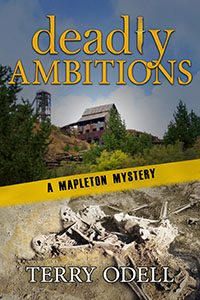 Peace in Mapleton doesn’t last. Police Chief Gordon Hepler is already juggling a bitter ex-mayoral candidate who refuses to accept election results and a new council member determined to cut police department’s funding.
Meanwhile, Angie’s long-delayed diner remodel uncovers an old journal, sparking her curiosity about the girl who wrote it. But as she digs for answers, is she uncovering more than she bargained for?
Now, Gordon must untangle political maneuvering, personal grudges, and hidden agendas before danger closes in on the people he loves most.
Deadly Ambitions delivers small-town intrigue, political tension, and page-turning suspense rooted in both history and today’s ambitions.
 Terry Odell is an award-winning author of Mystery and Romantic Suspense, although she prefers to think of them all as “Mysteries with Relationships.”
These are great, Terry! I didn’t know the whole versions of several, like “satisfaction brought it back” and “[Rome] burned in one.”
Thanks esp. for the “Blood is thicker” explanation. The original meaning makes far more sense b/c blood relations are accidents of fate and DNA. Chosen relations are intentional and often prove stronger.
Glad you found them interesting, Debbie. I know I did.
It is amazing English survived the one-two punch of Leo Durocher and Yogi Bera.
Will you accept a bad translation? Exodus 20:12 is often quoted as ‘Thall shall not kill.’. It is “Thall shall not murder.”. Fitting for this blog.
Yes, I’ve heard that, Alan. Thanks for bringing it up. Makes a difference, doesn’t it?
I love this! I knew the second part of many of the quotes, but never understood the “Starve a fever, feed a cold” one until your post.
It’s always nice to find a new tidbit, isn’t it? Thanks, Patricia. I can see a couple of characters discussing these.
Fascinating, Terry! I didn’t know the proper quote of many of these. Especially “Blood is thicker than water.” Exact opposite of the original intention.
This reminds me of Paul Harvey and “The Rest of the Story.”