
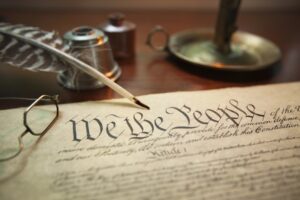
When was the last time you held a pen or pencil in your hand and wrote something other than a grocery list? I rarely even do that since I have an app that creates all kinds of lists. Most of us just don’t use a pen and paper anymore. Even the school systems don’t teach cursive any longer, and don’t get me started on that! I dread the day when no one can read the Declaration of Independence!
In our digital age, where typing has largely taken over, the simple act of putting pen to paper holds remarkable benefits for our brains. Handwriting stimulates the brain in ways that typing simply cannot match, fostering creativity and cognitive function. Studies have shown that writing by hand (rather than tapping away on your keyboard) increases brain connectivity and reduces the risk of dementia.
I didn’t know the dementia part, but I learned long ago that I retained more information when I took notes at a lecture with a pen compared to only listening or even typing them into a computer or tablet. You would think it doesn’t make any difference, but you would be wrong.
Studies show that when you write by hand, you retain the information by fostering a deeper cognitive connection with the material. The slower pace of handwriting encourages thoughtful composition, enabling you to articulate your thoughts and ideas more effectively.
Handwriting also engages multiple areas of the brain, strengthening neural pathways and enhancing fine motor skills, coordination, and memory. I, for one, am a kinesthetic learner, or a “hands-on” learner. The act of putting a pen to paper enhances my creativity and is my go-to when I’ve painted myself in a corner. Brainstorming with that pencil and paper unlocks my mind.
Think about it. When you write with a pen, your brain engages in a flurry of activity. Each stroke requires your fingers to perform distinct actions to form every letter. Meanwhile, your eyes are analyzing each character, while your brain cross-references it with all the other letters it has stored. The brain processes the memory and subsequently makes real-time adjustments to the fingers to form the letter.
That’s not true for typing. When typing, your fingers don’t have to trace out the form of the letters — they just make three relatively simple keystrokes. It takes a lot more brainpower to write than to type.
A study was conducted with thirty-six students who were given a digital pen and a touchscreen, and a keyboard with instructions to either write words with the pen or type them. The students’ brain activity was recorded via an electroencephalogram (EEG). When using the pen, the EEG showed the entire brain was active compared to a much smaller area when the student typed the word.
One last thing. Recently when I sat down to write a thank-you note, I learned the age-old adage, “Use it or lose it,” is true. Even though I’m a left-handed writer, my handwriting has always been very good. In fact, I always prided myself on my handwriting. But because I’ve sort of been on vacation, I haven’t been brainstorming or even taking notes at church.
My first attempt to write the note…well, let’s say a chicken could’ve scratched out a better letter! All because I can’t remember the last time I actually handwrote something. I’ve used either my phone or computer to make notes, write emails, and even to make lists. Since then, you better believe I’ve been practicing my handwriting.
How about you? When was the last time you actually took out a pen and paper and wrote something?
I don’t often write stories by hand but I journal by hand and enjoy the escape from the keyboard.
Pat, taking notes got me through school/college with good grades. Later in business, my handwritten notes of meetings, phone conversations, and diaries meant proving claims, settling disputes, and winning lawsuits. Taking notes during medical appointments is mandatory and those notes prevented potential crises numerous times.
However, arthritis makes my handwriting virtually unreadable. Typing is the only option and I’m thankful for that. But I do miss the creativity of pen and paper.
I still hand write grocery lists, to do lists, and markups on my manuscript. But it’s getting harder to read them. If only I had a pen that could copy and paste.
I took some college courses about ten years ago after being out of school for a long time. When I started taking notes my hand actually started to cramp.That was a wake up call and since then I have been writing in a journal most days with my trusty blue Bic. Everything else on a keyboard but for the creative side, it always starts with a pen.
I write in my journal almost every day. And I take notes in longhand when attending a lecture or talking with my executive team.
I am an IT Guy. There are three screens in front of me now. There is also a fountain pen next to my keyboard. I have tried many times to type notes as a meeting is going on, and it just does not work for me. I find the fountain pen slows me down just enough to take meaningful notes.
Have a good day everybody.
Pat, I regularly work out plot problems and journal on paper, and will draft a bit of fiction by hand when I feel stuck and need a boost.
In fact, I took a stack of legal pads with me to my annual writers retreat earlier this month, with the intention of perhaps drafting the opening of the novel on paper first, but ultimately ended up mostly typing. Still, as you note, nothing works my brain and my creativity like handwriting. I just need to slow down and work on legibility.
Great information, Pat. I use pen and paper to make notes about characters, scenes, etc as I’m forming ideas for a novel.
I wrote a TKZ post several years ago on the subject of Handwriting vs Typing and it received a lot of response. Brenda (BK) Jackson suggested we do an experiment, so seven of us donned our lab coats, took pen in hand, and spent a week writing at least some of our work by hand. It was a good learning experience. (Thank you, Brenda) The results are at
https://killzoneblog.com/2022/11/results-of-the-tkz-handwriting-experiment.html
I still occasionally draft a TKZ post in handwriting.