
Last night I spoke to a book club in a very exclusive Dallas neighborhood.
I arrived early, because that’s the way I am. Half an hour early is almost late.
The host lived in a stunning midcentury house nestled under spreading live oaks. Since I had a tiny bit of time, I drove around the neighborhood, enjoying the architecture from a time period I loved.
In college, I pursued a degree in residential architecture before deciding that leaning over a drafting board for the rest of my life wasn’t my idea of a career. However, I had a grand old time arguing with my professor over house styles. This was 1972, and he insisted on one style of home, those new boxes everyone is remodeling now days, while I insisted on Frank Lloyd Wright style homes with huge windows and lots of open space.

By the end of the year, he promised not to fail me if I promised not to take the second half of his course. Maybe that’s the real reason I bailed on architecture.
College was a problem in many ways, not because the drinking age was eighteen, but because I had to drop out of several career opportunities such as paleontology, and geology. Being colorblind was a serious problem.
But anyway, there I was later that evening, standing in front of the fireplace in this glorious house, surrounded by more than sixty folks my age. I love talking with readers who understand what a typewriter is, or who remember the days of carbon paper, Whiteout, the Dewey Decimal System, card catalogues, and the U.S. Postal service.
That last subject comes up in our discussion of the old days when would-be authors mailed query letters and manuscripts, along with postage, or self-addressed stamped envelopes for publishing houses or editors to send the materials back, or to send back rejection notices.
I’ve probably talked with hundreds of book clubs ,organizations, or attendees at book signings about books and writing, and weave humor throughout these presentations, along with history, industry information, and the craft of writing. Panels and book signings require the same attention to audience needs.
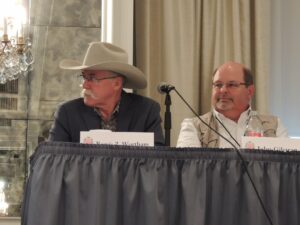
Having done these so many times, I’ve developed a sense of timing, allowing for laughs, surprise, and for people to take a moment to realize what I’m talking about. The slow-burning fuse until they get my point. This group of folks my age was the most attentive I’ve ever encountered, reminding me of kindergartners watching a magician.
In that grand old house, my audience sat there like mannequins, some offering vague smiles, but little else. In my mind, I was falling flat. Reading the room, I changed directions on the fly, discussing how our industry has eliminated mass market paperbacks, the shrinking of shelf space, and the number of books published each month, resulting a firehose of reading opportunities for customers.
The crickets outside applauded with their chirps. I wrapped up, and opened the floor for questions or points of discussion.
A couple of people bestirred themselves.
A hand went up. “Do you outline?”
AHA! Now I knew what they wanted, and launched into my own writing process. Finished, I offered the floor for more questions and comments.
Crickets again.
A tentative hand went up. “Can you discuss how much research it takes to produce a book like Comancheria?”
That’s why I was there, and during my presentation spent a considerable amount of time discussing plot, characters, and the source of this first book in the Hollow Frontier series. The question was a breath of fresh air, and I explained my love of history, reading, and how I absorbed volumes of history before writing my books.
Our hostess finally stood at the exact time she’d previously told me the meeting would end. “Let’s thank Mister Wortham for his time and books.”
The room rose in a standing ovation. Stunned by their response, I stepped aside as the hostess finished some organization duties and the meeting was over. For the next fifteen minutes, I shook hands and accepted gracious comments thanking me for a “wonderful presentation,” and “exceptional discussion on the craft of writing and publishing,” and “for keeping us completely entertained throughout the evening.”
On the way home, I realized this group of retirees exhibited the behavior drilled into Baby Boomers way back in elementary school. Our teachers back then hammered us with “pay attention” and “be polite while the speaker has the floor.”
Tentative or inexperienced authors might have stumbled or trailed off early in their talk, but I’d seen this before. It’s all part of being a speaker, and entertainer.
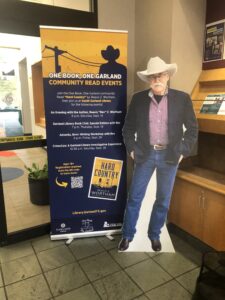
The next time might be a boisterous crowd, like a wine-tasting book club I spoke to in East Texas. They were the rowdiest group I’d ever seen, and I could have read the phone book to their great enthusiasm.
The wine helped.
Other groups offer polite applause as I sit down, but then book sales might be more than anyone would have anticipated.
It’s all part of the package. Write. Publish. Promote. Speak…speak…speak.
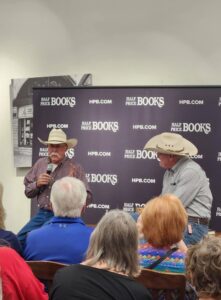
Good luck with that.
I love to speak to groups about writing. Once someone ask if I got nervous before speaking, and I told them no, that I’d taught abstinence education to teens, and once you’ve talked to kids about sex, you can talk to anyone about anything.
Fans and groups are looking for a little information and a lot of entertainment. That can come from stories and experiences. No matter, it’s always fun!
I’ve never spoken to a group about my writing, in well over a quarter-century of doing it – because I didn’t even start writing until I had been ill almost a decade. Sounds like a lot of fun, and my publicist would like it, but there’s nothing there to do it WITH.
But I love talking about it – and will bend your ear if given the chance (and for a short period while I still have some energy).
You’re right about manners – even now, when someone has set me off, I make sure they get a chance to speak, and pre-warn them I’m forever needy in that area.
I love talking to groups and enjoy presenting. I have no set “talk” and voice around like a ping pong ball. It seems to work! I love to discuss the creative process and the craft.
Tough crowd. It’s always nice to know which me they want. Writing teacher me. Entertaining reading me. Or talk about the publishing industry me. Funny me always comes too.
I’ve spoken to crowds who don’t seem to possess a sense or humor, or didn’t want to be there in the first place. Others are cheering and whistling at the outset. No matter, If only one person shows up, they get the full monte.
I remember that I am the entertainment at a book signing. I’ve been to a book signing of a ‘FAMOUS AUTHOR,’ who sat on a chair on a stage and never stood up, didn’t interact with the adoring fans. I was unimpressed.
I am honored to be asked to speak and show it by respecting the audience. I stand up and smile at each person. I am introducing myself, not sellling books.
I answer any questions and always thank the audience for their time.
We’re there to do a job and thank everyone for being fans, buying our books, or for only being there.
Hmmmm. I’d love the opportunity to speak with a book club or other writing group. How does one about finding these opportunities then convincing someone that I have something worthwile to say?
It’s organic much if the time. I started by talking with service organizations, and attending small writers conferences. Word of mouth is still the best way. Good luck!