
by James Scott Bell
@jamesscottbell
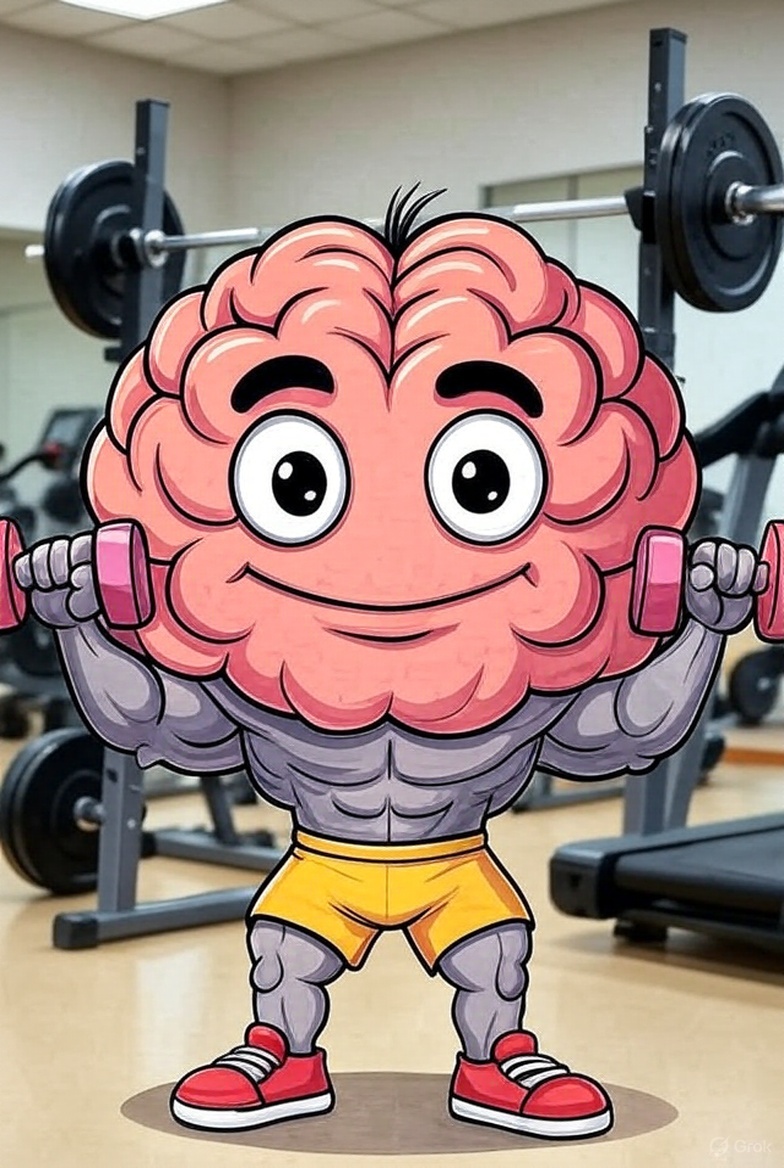 We all know that various tasks, assessments, creations, observations, and reactions trigger different parts of the brain. For example, the other day I was driving along on a busy, two-lane street near my home, enjoying the nice day and the classical music station on the radio, when a loud VROOM blasted next to me and instantly put me into “fight or flight” mode, as some idiot in a Mustang shot past all the cars by racing on the median strip, then darting back into traffic like he was playing a video game, then went out again to pull the same stunt. A bad accident waiting to happen, which is old news here in L.A.
Anyway, when it comes to creation, we have a “team” consisting of the imagination group, the analytical staff, and the Boys in the Basement. They band together on our projects, and as we work in tandem with our good ol’ noodle (for you youngsters, noodle is old-school slang for head, which is derived from the 1500s word noddle—which in Old English meant head resting on a neck—and some smart aleck in the 1700s who added the “oo” sound from fool. I also could have chosen nut, noggin, or dome. Take note, as there will be a quiz on this later) we exercise our brains, which is essential for our overall health.
Which is why handing off all creative effort to AI is like preparing for a long distance race by eating Twinkies. The long term effect is horrible, especially in young brains that are still developing. Yes, AI can be an aid in some situations, but there should be a flashing Approach With Caution sign at every turn.
Now, there are different kinds of writing that work out the various parts of the gray matter— fiction, essays, poetry, jingles, marketing copy, letters (remember letters? That you write in your own hand and put in an envelope? That took some care, unlike the emails we send every day and the texts we fire off like so much digital buckshot) and anything else that requires a modicum of thought.
I consider myself a writer. I write. That’s all I ever wanted to do. I specialize in that form of fiction called the thriller. It’s my bread and butter—in fact, it butters my bread—and it is my primary focus. But when I engage in another type of writing I find that my overall creative muscle is improved, and I feel that when I go back to fiction.
That’s why I started a Substack. It’s my foray into a type of nonfiction I call “Whimsical Wanderings.” These are free-range essays without fences. I spend part of my early mornings playing in this part of my brain, and bring order to it later. Ray Bradbury once said of his own writing, “Every morning I jump out of bed and step on a landmine. The landmine is me. After the explosion, I spend the rest of the day putting the pieces together.” I can relate.
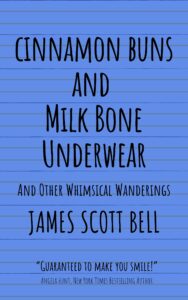 And now, gentle reader, I am happy to solve a problem for you. With the holiday season upon us, some of you may be scratching your head about what to get for that certain someone you find it so hard to get things for. What gift is suitable, surprising, fun, and relatively cheap? Now you have it. The best of Whimsical Wanderings is contained in the collection Cinnamon Buns and Milk Bone Underwear, the print version of which is available for purchase at the special intro price of $9.99 (that’s the lowest price Amazon will allow for this book. In a week it’ll go to $15.99, at which time I’ll start announcing it to the world at large, including Albania). You may get it here. There’s also the ebook version at the low end of $2.99, here. If I may offer a blurb:
Every time one of James Scott Bell’s Whimsical Wanderings arrives in my email box, I smile, even before I open it. Each post takes me down a path I am not expecting but am so glad for the journey by the time I reach the end. If you want to lift your spirits while being surprised by how one thought can lead to another, treat yourself to this book! — Robin Lee Hatcher, Christy Award winning author of The British Are Coming series
End of commercial. I’ll leave you with this from Malcolm Bradbury, in Unseen Letters: Irreverent Notes From a Literary Life:
I write everything. I write novels and short stories and plays and playlets, interspersed with novellas and two-hander sketches. I write histories and biographies and introductions to the difficulties of modern science and cook books and books about the Loch Ness monster and travel books, mostly about East Grinstead….I write children’s books and school textbooks and works of abstruse philosophy…and scholarly articles on the Etruscans and works of sociology and anthropology. I write articles for the women’s page and send in stories about the most unforgettable characters I have ever met to Reader’s Digest….I write romantic novels under a female pseudonym and detective stories…I write traffic signs and “this side up” instructions for cardboard boxes. I believe I am really a writer.
Do you do any writing other than fiction? Have you tried morning pages? How do you exercise your cranial creative capacity?
Jim, I couldn’t agree more with your analogy about AI and Twinkies!
Cross-training the brain really helps. I started out writing fiction but detoured into magazine/news articles on a variety of subjects from personality profiles to historic brothels to Rat Rods to opioids. Along the way, I always learn info that sometimes finds its way into my novels.
Blogging for TKZ stimulates an even different brain part cuz it’s more like teaching with the focus on education and how to help other writers.
Fiction and nonfiction light up different parts of the brain. Book-length work exercises different muscles than short pieces.
Every word helps.
I know several friends your new book will be an ideal gift for. 🙂
Thanks, Debbie!
I have my blog articles and my Substack posts, plus my monthly newsletter as side gigs to my novel writing.
Keeps me occupied and an excuse to avoid housework.
Terry, my grandmother said, “Only dull people like housework.” Her approach was to do what had to be done, then get on with the interesting things, like writing a newspaper column and mission work in the mountain community. She also climbed trees in her sixties and joined us snow sledding and playing in the creek. I feel profoundly fortunate to have had a Granny like her rather than one who had a perfect house where we weren’t allowed to touch anything.
I’ve tried that particular reasoning. It does not impress Mrs. B.
Housework will always be there. Our opportunity to write may not, so I always opt for writing. I contribute to a couple of blogs besides my own and create workshops for conferences but fiction is my go-to. And I keep meaning to do morning pages but lately my mornings get away from me.
I know how that feels, Pat. That’s partly why I wake up so early. I like writing in the dark.
Kinda like “writing into the dark”, hey?
🤓
Oh, heavens no. The very opposite. Writing into the light.
Oh yeah…better, Jim!
I totally agree. Exploring different genres gives you insights into your preferred genre. My first crime story started out as a sci-fi tale. Another way to cross-pollenate your imagination is to read science, history, and travel. A recent re-reading of Barbara Tuchman’s The Guns of August inspired two story ideas I’m already working on.
Absolutely, MC. History and biography for me.
Journaling helps me exercise my brain. Often the journaling is writing related, but not always. I’d like to do a lot more than that for mental cross-training. Today’s post certainly provides the inspiration 🙂
Thanks for mentioning journaling, Dale. That is a time-honored practice with many benefits.
I write for TKZ and my occasional blog post.
But what really turns my creative crank is the fun new thing I’ve discovered. And that is creating marketing graphics for authors. It forces me to fit some info into a small package, but clearly express the book’s theme & who the author is. These graphics can be used on SM, author websites, & even as a background for the author’s speaking engagements.
Great fun for a girl who’s always said, “I don’t have an artistic bone in my body.”
Happy Sunday!
I like that idea. Another part of the brain at work.
I was much more successful with my nonfiction, both financially and a larger market– my writing blog, articles on writing in various magazines, and articles in books about the emerging ebook market as well as ebooks in libraries. None of them drove readers to my fiction, but nonfiction in both the writing and the research scratched parts of my brain that fiction did not, and I felt all my education wasn’t totally wasted.
Brain scratching is a good way to put it. And it helps to have fun.
I do like writing different formats. Even though my preference is for the novel, writing short stories, blog posts, and even back cover copy makes me stop and think through how to use words to get the effect. Brain calisthenics, for sure.
Your posts on Whimsical Wanderings always make me smile while I’m learning something. Look forward to many more wanderings in 2026.
Thanks, Kay. I’ll be there!
I’ve written everything from novels, short stories, microfiction, journalese, scholarly work as both a student and a tenure-track, non-teaching professor (archivist). I felt I’ve always switched with a certain amount of ease but maybe fooled myself. One thing completely eludes me — poetry.
Me, too…or three!
🤡
For me, poetry only if it’s silly.
Same. Poetry with laughter only.
Totally agree, Jim. Whenever I work on a nonfiction project, I can’t wait to jump back into fiction afterward.
I write psychological thrillers, mysteries, and environmental thrillers. I toss in dashes of romance and the best parts of horror. I write narrative nonfiction and true crime. I write nonfiction and children’s books. No genre is off-limits, and I’d never tell myself I couldn’t write whatever I wanted to try. Writers write.
Congratulations on your new book baby! Sounds wonderful.