
You can swim all day in the Sea of Knowledge and not get wet. — Milo in The Phantom Tollbooth
By PJ Parrish
I spent yesterday in the cold rain hanging Christmas lights on my shrubs. And then they didn’t work. Yeah, yeah…I checked them all first. But they pulled a Griswald on me and only half of them went on. An hour later, a yanked them off and tossed them in the trash. Bah humbug.
So I decked the hounds in boughs of holly, made a Hendricks Floradora martini and, like my lights, got half-lit.
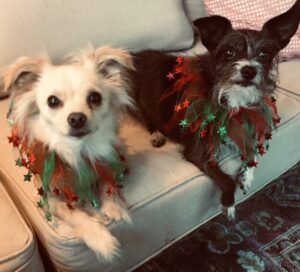 .
.
Ever wonder where the word humbug came from? It wasn’t Dickens, by the way. It goes back to 1750, first appearing in The Student where it is called “a word very much in vogue with the people of taste and fashion.” This makes me feel marginally better.
A humbug is a deception, a lie. According to The Vulgar Tongue by Francis Grose — dontcha love that title, so E.L. James? — to hum in English originally meant “‘to deceive.” It could also come from the Italian uomo bugiardo, which literally means “lying man.”
In the 1961 children’s book The Phantom Tollboth, there’s a large beetle-like insect known as the Humbug, who is a consummate liar. I had never heard of this book before a friend mentioned it in passing recently as one of his favorites and lent me his copy. Bah humbug…okay, so I read it .
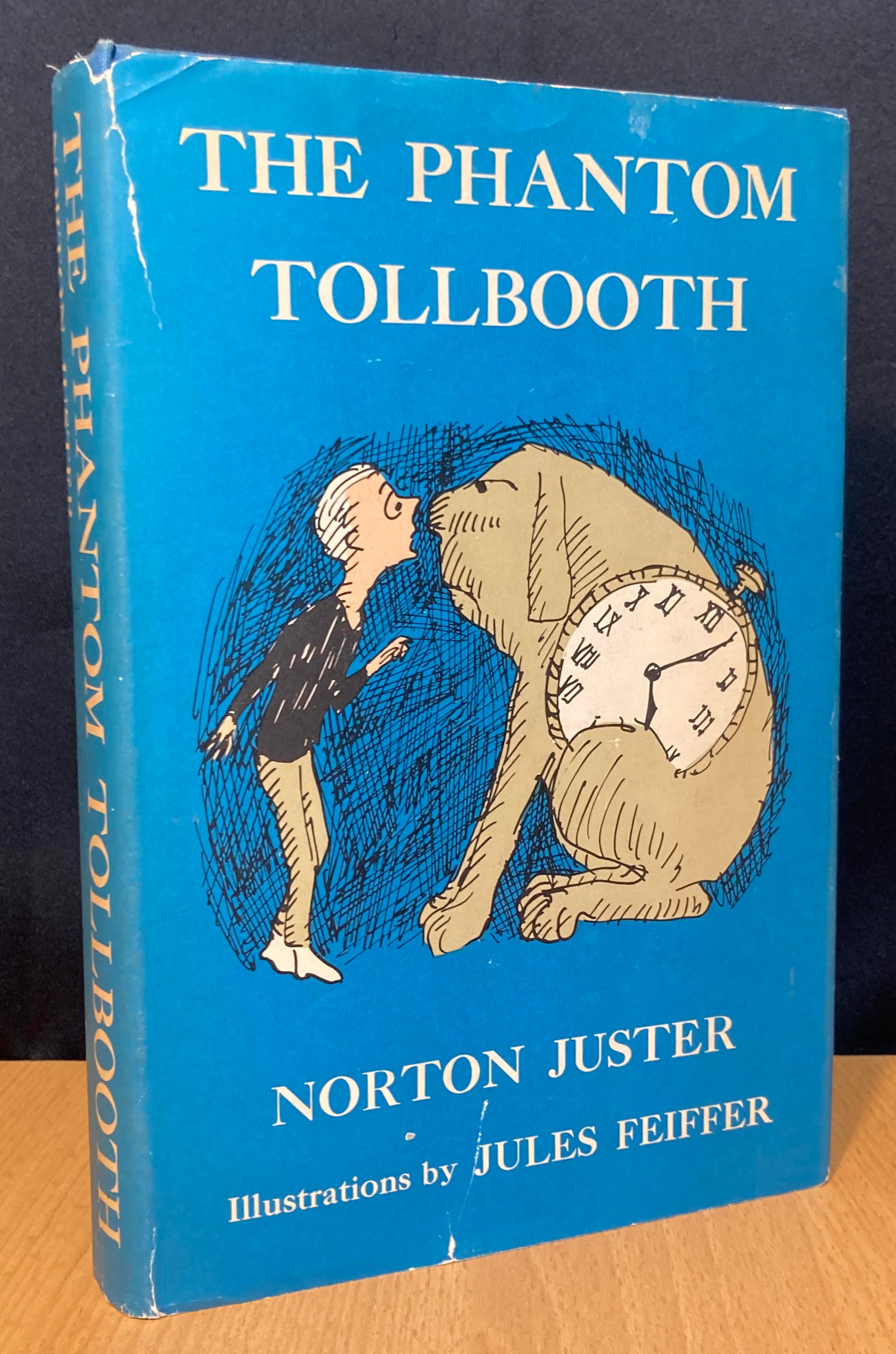
The story concerns a sad kid named Milo who, bored to death at school — and by life — gets a mysterious package. Inside is a small tollbooth and a map of the Lands Beyond, leading to the Kingdom of Wisdom. There’s a note — “For Milo, who has plenty of time.” Milo begins a fantasical journey where he meets a companion dog Tock (so named for the alarmclocks in his fur), He leaves behind The Doldrums, and goes to the Word Market, where he mets the Spelling Bee and the lying Humbug, and then on to Dictionopolis. In the Mountains of Ignorance, they fight The Gelatinous Giant. The giant is a green Jello blob who takes a lot of naps, can change shapes on a whim, eats people, bugs and dogs. His weakness is he is afraid of new ideas because they make him sick to his stomach. Milo uses The Box of Words to defeat the giant.
I’m tempted, but I can’t recount it all here — it’s incredibly dense with the kind of details kids adore and double entendre lessons adults should heed. And writers would get kick out of it. All ends well for Milo. He goes back through the tollbooth, “awakening” back in his bedroom, but convinced his trip was real. He finds a new note — “For Milo, who now knows the way.” The note say that the tollbooth is being sent to another kid who needs help finding direction in life.
So, crime dogs, on this holiday eve, as we look to a new year with hope, I wish you health, happiness with your loved ones, and sanity wherever you can find it. And that your Christmas lights work. Oh yeah, and that you keep writing. May you pick up some good stuff at the Word Market, find your way out of The Doldrums and keep marching on toward the Kingdom of Wisdom. As The Phantom Tollbooth told me:
“Milo continued to think of all sorts of things; of the many detours and wrong turns that were so easy to take, of how fine it was to be moving and, most of all, of how much could be accomplished with just a little thought.”
How fine is it just to be moving.
How fine is it just to be moving ~ my first thought when I climbed out of bed this morning. I’d never heard of “The Phantom Tollbooth” but it sounds like a book my grands would love.
Wishing you and all TKZers a new year of hope, writing and good health!
To be just moving…it’s sort of kiddo zen. But it works on a lot of levels. To be thankful for decent health. To be going forward for a new project. To just be alive. Which is how I feel today because the SUN IS OUT here for the first time in 5 days.
You had me at Hendricks.
Merry Christmas to you Krs, and Happy Pickleballing New Year.
LOLOL. My agent was the one who turned me on to it. 🙂 If we ever meet face to face, drinks are on me. Unless it’s at Atlanta airport, where my Hendricks martini was $30. Never paid more than $25, even in Manhattan!
Love your pups, Kris!
I shudder to think what Kimber would do if we tried to deck her halls…I’m sure her GS/Malinois genes would strongly object…
Happy holidays to you and yours, and to all the TKZ gang.
🙂
I tried to put a santa suit on Archie yesterday. Now I know why his vet calls him “very opinionated.”
🤡🤡🤡
I have to admit that even though it drew readers throughout my library career, I’ve never read “The Phantom Tollbooth.” Now I must 🙂
We were blessed this year with Christmas lights delivered and set up by wonderful neighbor who wanted to do something nice for us, since we’d given my 2003 Honda Civic to the family across the street who has three teenagers.
It’s the first time in all the years we’ve lived here we’ve had our own Christmas lights, and now there are seven houses on our block with festive lights.
Happiness and joy to you as well, Kris!
I actually gave it another go, Dale! The lights were old and tangled. So I hit Walmart and got one of those net-light things that you just kind of toss on the shrub. Worked great! Happy holidays.
A friend dressed up her pug as Tock for a dog parade. My sister’s kids loved THE PHANTOM TOLLBOOTH so I read it. Puns, math jokes, and fantasy. What’s not to love. Mark Twain used the word “humbug” a number of times including in “The Mysterious Stranger.” And there should always be a comma in “bah, humbug.” Any Scrooge worth his mettle knows that.
Tock is a good dog name. And I stand corrected on the comma!
Sorry to be so late. Hoping for slightly more sanity in today’s schedule.
“of the many detours and wrong turns that were so easy to take, of how fine it was to be moving and, most of all, of how much could be accomplished with just a little thought.” — Love this.
Merry Christmas to you, Kris. With or without lights.