
Over the years, I’ve judged several writing contests, local and nationwide. It’s an enjoyable way to give back to those organizations and the reading community, exposes me to new writers, and is an eye-opening experience. Today I’d like to briefly discuss what makes an award-winning novel.
It has to be outstanding, towering over the other submissions.
It should be simple, but barely five pages into any book, I can tell if it’s a quality publication, or one that falls short. You’re on your way if I’m engaged after the first five pages, but grab me on page one. Think Stephen King, the man who can catch me within the first paragraph, or James Lee Burke, whose writing voice is as smooth as a glass of good whiskey.
To help you along, here are a few suggestions.
- First, find your writing Voice, and try to make it unique. This has been discussed ad nauseum here on the Killzone Blog, so do a search and read what the Masters have offered.
- Please, please, I beg you, please avoid as many adverbs as possible. Yep, we’ve plowed that ground before, but really, “He peered around the bush sneakily.”
Good Lord. Just read that again. Her peered around the bush sneakily. Makes me want to throw up in my mouth a little. Or this one, “he crossed the tarmac staggeringly,” is going to charge up my Crap Meter and if there are many more of these stinking piles, it goes into the “Nope” box after it bounces off the wall.
- Let’s get this out of the way, too. At this stage in the evolution of AI, I can almost always (99%) of the time tell if it was written by a program and not a real person. For understanding, refer to those horrible emails you likely get each week that tries to extract money from your bank account by offering to promote your novel for mere pennies on the dollar.
“Dear Reavis, your book, The Texas Job is an excellent example of western noir, but it’s languishing in an unread desert like a tumbleweed in a western ghost town, but we can help with that. Let’s get this tumbleweed rolling toward potential readers….”
Or “I hope you’re doing well. I’m Natashia Smith and represent Hagia, organiser at The Best Writers Life, a vibrant community of 1,500+ passionate readers, writers, and creators who love immersive historical fiction, powerful characters, and richly detailed frontier stories….”
I’m afraid AI will someday learn to cloak itself, but right now this style is as obvious as a Texas twister on the windswept plains…sorry about that.
But back to contest entries.
- Find the proper starting point of your novel.
Many authors (and I was guilty of this as well way back when) begin with a Prologue, a device which used to work back in the days of John Saul, but hasn’t aged well. Though it’s possible to weave it properly, it can, and does work sometimes, but not often. Prologues are usually designed to bring tension and/or excitement at the outset, likely knowing in the back of the authors mind that the true beginning is slow.
Dig back into you manuscript and find where a scene truly grabs your readers attention without resorting to devices. Start there at the moment where action or tension arises.
And to build on that theme, your first sentence or paragraph should grab the reader by the throat!
Charlaine Harris opened Dead Until Dark like this. “I’d been waiting for the vampire for years when he walked into the bar.”
“The morning burned so August-hot, the marsh’s moist breath hung the oaks and pines with fog.” Delia Owens, Where the Crawdads Sing.
“All this happened, more or less.” Kurt Vonnegut, Slaughterhouse-Five
Yep, that’ll get my attention. Why do I bring that up? Because as contest entries trickle in at the beginning, I’ll have time to sit back and hope the author will develop the plot and characters without wasting any more time, even though the beginning is rough. By the time the deadline rolls around, entries arrive at my doorstep in droves, and with the judges’ deadline looming, the book has to capture my attention, and that of the other judges, as soon as we open it up.
- Give me something I haven’t seen a hundred times.
- I need strong pacing and clean prose. For a Masters Course in both categories, read Texas author James Wade. He’s pushing Cormac McCarthy and Larry McMurtry out the back door.

- Dialogue should be crisp, and mean something. I don’t need pages of two characters chatting each other up over tea and cookies about last night’s dinner party, unless it is the jumping off point of the novel. Save that for real life. Let’s get to the meat of the plot to keep me engaged.
- No three-page info dumps or looooong descriptions of characters features and clothes. Scatter that necessary information throughout the novel so that it blends in and doesn’t stand out.
- Less is more, when it comes to those same descriptions. John GIlstrap is the man to copy when it comes to his protagonist Jonathan Graves. He doesn’t give us details, but I know what the guy looks. like and would recognize him at an airport…along with Boxers. (Read his books to meet those guys.)
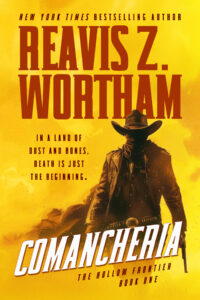
- How about a fresh angle on a familiar genre. Tooting my own horn here, but I hope when Comancheria is in the hands of judges next year, they’ll see a different kind of western.
- Judges will remember how a book makes them feel.
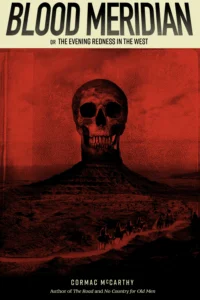
That last bullet point brings us to the aforementioned Cormac McCarthy who wrote Blood Meridian. I had to take a shower after the last page.
Florida Roadkill by Tim Dorsey left me reeling because of the plot, twists, and pure fun. It is one of the few books I immediately dove back into after The End. The second was Jeffery Deaver’s The October List. They both made me feel like I’d experienced something special and because they were so good, I almost raced through them too fast. I had to go back to truly absorb the brilliance of those two novels.
- Lift your vocabulary. I don’t mean keep a thesaurus open on your computer or desk, but avoid common words. See above for the word “read.” Yep, I read those books, but found a different way to say it. I “experienced” them, “absorbed them,” and “raced through the stories because the action and pacing were perfect.
- If sentences sound awkward, re-structure them.
- Go line by line and delete or re-write every passive sentence you can find. “The tiles are delivered and the backsplash will be finished by this evening.” Or, “Safety glasses are worn by the entire crew to minimize the risk of injury.”
How about: The tiles arrived just in time to finish the backsplash by sundown.
Or: The crew wears safety glasses at all times while on the job.
Where did those two examples come from? Most HGTV programs. Listening to the narrator on many of these series is a crash course in passive sentences.
And finally, highlight the following.
- The entry should be polished to excess, with no typos or layout problems.
That sounds simple, and typos get through in even the most carefully edited novels, but you’d be surprised how many times published works contain “their” or “there” for “they are.” Some say typos have no bearing on the quality of the story, but it’s the entire package an author should be concerned with, and run-on or misspelled words shriek a message of laziness and disrespect for the reader and their hard-earned cash.
Pure typos or misplaced apostrophes leap out at the reader. Sometimes I feel as if the author finished his or her manuscript without doing much more than a quick read then sent it on to be self-published. No fault if you want to go that route, many successful authors are self published, but find and pay an experience d editor to clean up your work.
These are just a few of the problems I’ve seen.
- One additional note (and it has nothing to do with the quality of the novel itself), but the cover is my first introduction to your submission. If it looks like a second grader used clip art to wrap your novel, it won’t make a good impression. I know, that sounds bad, but it’s true. I speak from experience. Just look at this one of my own, which I’m afraid still hasn’t overcome that first impression. I argued with my publishers until I turned blue. They finally gave me an ultimatum, and I caved, but I wouldn’t do it again. When that publishing company was absorbed by another, the CEO, in a huge staff meeting, pointed at his cover on the screen and asked, “What the fudge were you thinking?”
Only she didn’t say fudge.
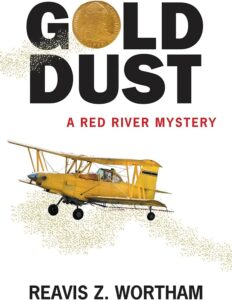
Would you pick up these familiar titles if this cover was the first time you saw them?
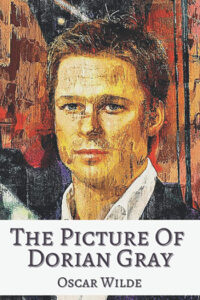
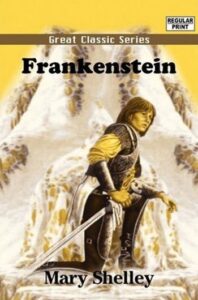
Probably not, and with that, good luck and may the best book win.
Excellent points, Rev.
Back when I was a member of RWA, I judged many a manuscript. These contests were fund raisers for the various chapters, and judges were required to give scores and often comments. A tough job.
Then, I was a judge for a major mystery organization’s contest, and I was hit with over 300 entries. We were expected to read the whole book, which, IMHO was kind of silly because at some point, be it 5 pages or 5 chapters, it was obvious it wasn’t going to make the finalist cut.
Youre right, Terry. You can tell within five pages, and from time to time, in the first or second. Not saying the story might not be good, but it’s the voice and writing ability.
The number of entries is why I start as soon as they come in, but I’d sure like to get back to my TBR, or the manuscript, or column, or blog I’m working on.
I think I would be gazing with an open, honest expression at the organizers as I said, “Yes, I read really fast, that’s how I did this so fast.”
Nothing on Earth would make me read 300 non-great entries. Well, a giant paycheck. Nothing else would do it.
I think one of the hardest things about writing is making that decision about where to begin your story. It takes going through a lot of revision for me to settle on where to start.
And while I totally agree that you have to start with a strong opening, and that even the opening lines should be attention grabbing, I find that what interests and grabs me is not the same as what interests and grabs others. It is not uncommon for someone to point out an opening line that someone felt was an attention grabbing opener and for myself I read it and find it not attention grabbing at all.
I also have more tolerance for description (depending on what is being described) than most people. In over 50 years, no one has supplanted Zane Grey as my favorite author & he is more descriptive than most people’s ADHD can tolerate in this day and age. Yet his descriptions brought me to amazing places in the west I’d never seen before. On the other hand, I have zero patience for a page worth of description of a woman’s fingernails or dress, or things like that.
But it’s part of the fun of writing—considering my unique viewpoint and likes/dislikes in writing and also balancing that with “what the readers want”. Which, as we’ve discussed at TKZ a million times, is a high quality story that gets and keeps their attention. I just need to keep on going with the practice, practice, practice. I certainly have enough story ideas to experiment on. 😎
You’re right! It’s simply imexperience, I imagine, but I fell into a lazy rut once and had to be ordered out of it.
The truth is, you can’t always predict what people want, though I keep hearing from followers that they want a new Red River. Authors have to scratch that personal itch that tells them a story needs to come out. We’ve talked about chasing the market, and that’s a recipe for disaster.
Authors simply need to write, as you said, practice, and let those stories flow onto the page.
I’ve judged many writing contests and I wholeheartedly agree with you. Please, please, please, do not use the prologue as a way to dump backstory! I’m also an acquisitions editor for a medium-sized publisher and I see a lot of proposals that make me cringe. “I brushed my long blonde hair out of my emerald green eyes…” Nope. Instant rejection. I could go on, but you have said it well!
Another thing I see is “I pulled my long legs out of the car.” How many times have we ever had that thought when getting out of a car?
Makes me wonder how their legs wound up in the backseat.
Maybe someone should make a list of all those sentences that we see over, and over, and over…
🙂
I have to pull my short stubby legs out of the car, too.
Proposals or query letters are an entirely different discussion for sure. But in a sense, it’s the same. Write right, get the editor’s or agent’s attention right up front with excellent writing, and don’t lead with two paragraphs of information that could be distributed elsewhere.
” don’t lead with two paragraphs of information that could be distributed elsewhere. ”
or a dream sequence.
Michener was one of my favorite authors in my teens and twenties but that was before photos and movies showed me what I’d never seen before.
As for prologues, I’ve used them, usually to introduce the villain doing something that affects the story. Now I just make what would’ve been the prologue the first chapter.
I still like the old writers, and have quite the collection in my library, but that doesn’t work any longer. People have shorter attention spans, and they’re used to action right up front, without setup. Reading is relaxing for me, so I’ll pick a Michner any time and see the world through his eyes.
But if it’s a thriller, let’s crank that sucker up!
“Judges will remember how a book makes them feel”–excellent point, Rev, the same as readers do with a book that hits home for them.
Having a copy edited and thoroughly proofed manuscript is indeed important. It’s well worth the money to get a professional copy edit, and well worth the time to do a final proof read on your book.
Thanks, Dale! Appreciate the support!
All published books should have all these things. A very good book or a great book should go well beyond simple competence. My own reaction to one of these books is either “Damn, that was a good book,” or “Damn, I wish I’d written this.” Most of us know it when we read it. And we never forget that book.
Over many years, I judged thousands of books by unpublished writers and by established authors, and it was a rare book that I thought achieved anything beyond competence. The one I remember the most had the premise that the world was ending because the universe had expanded to a certain point and was now contracting into total oblivion. The main character was a police detective who spent his last days solving a murder as chaos reigned because everyone deserved justice. At the end, he’d solved the crime and happily sat down for a nice tea with his wife as the world faded away. A good mystery and an emotionally powerful setting.
That sounds like an outstanding novel. That’s what I mean, too, something unique, different, an idea that hasn’t been explored. Those are the ones I remembrer. We all strive for competence, some settle for less, and all hope for excellent, and that bolt of lighting to strike.
My two cents, Rev…
I can tolerate description in a novel–but it had better be about a weapon, not legs or fingernails! 🙂
Great post–worthy of a copy and paste and file. Have a great weekend.
You’re very kind. Thanks, Deb.
Long prologues – former history – ‘setting the scene’ – genealogies – all invite skipping, but short ones are read before the critical part of the brain shuts it down, and can be used for very specific purposes.
I use a very short prologue for each of the three books in my mainstream trilogy – giving each time a taste of an article in The New Yorker written AFTER the story has ended and people might want to know WHAT happened.
It’s a teaser to stick in the mind of the reader through the three volumes and half-million words of the finished story.
147 words for the first one – in the style my kind of readers are used to seeing the TNY’s long articles.
The reader hasn’t met these people before (in real life they would be icons known to most), but the reader would be expecting to get all the inside dirt.
Seems to work – and hits people at different times during their reading of the whole, when they go, ‘Wait a minute! I see where this came from – and I know better!’
And there you go. There are no specific rules to follow. Just find what works, and grab onto it!