I just watched the Martin Short documentary on Netflix, and he said two life changing things for all creatives. The first:
“My career has been 80% failure.”
This is a man whose résumé includes SCTV, Saturday Night Live, Three Amigos, Father of the Bride, Broadway shows, Jiminy Glick, and Only Murders in the Building.
And he thinks his career is 80% failure.
Let’s Reframe How we Think About Success
Using Short’s perspective we calculate creative success completely backward. From the outside, we see Martin Short’s career as a highlight reel. But Short lived all the parts that don’t make the retrospective. The jobs he didn’t get. The shows that were canceled. The ideas that went nowhere.
That is an entirely different way of looking at a creative career. Most of us secretly think success means gradually eliminating failure.
We think a career trajectory looks like this:
- Beginner: Lots of failure.
- Intermediate: Less failure.
- Professional: Very little failure.
The Goal Isn’t to Stop Failing; It’s to Keep Trying
My other favorite quote in the documentary is:
“Show business is talent, luck, and endurance.”
Endurance is the most underrated ingredient of a creative career.
We spend an enormous amount of time talking about talent. But to be successful, you must continually try and create. A creative career is a marathon, not a sprint.
It means:
- You write another story after the story nobody bought.
- You send another query after the rejection.
- You rewrite the screenplay after the notes that tear it apart.
- You pitch again.
You keep going long enough for talent and luck to have another chance to bump into each other.
Confidence Doesn’t Mean Thinking You’ll Succeed
Short connects endurance to confidence.
We think confidence comes from success. But that’s a pretty fragile form of confidence, because sometimes the thing isn’t good. Sometimes it is good and nobody wants it. Sometimes you are good and you still don’t get the job. Short’s version of confidence is much sturdier. It is being willing to fail.
Creative confidence becomes: I can survive if this doesn’t work.
That is a much more useful superpower.
If your confidence requires every project to validate you, every rejection becomes catastrophic. If your confidence says, I may fail and I’m going to keep creating anyway, rejection loses some of its teeth.
In Little Women by Louisa May Alcott, Amy says,
“I’m not afraid of storms, for I’m learning how to sail my ship.”
With an attitude of learning, failure means moving forward.
The 80% Rule Changes What Failure Means
If Martin Short can call 80% of his career failure, then failure is not evidence that a creative career isn’t working. Maybe failure is part of what a working creative career looks like.
That doesn’t mean every rejection should be ignored. Failure gives us information. Sometimes the script really does need another draft. Sometimes the concept isn’t strong enough. Sometimes we’ve been pitching the wrong people. We learn. We adjust. We get better.
But there’s a dangerous equation creative people make all the time:
This failed = I am failing.
Those are not the same thing. Martin Short’s career makes that distinction gloriously clear. Individual things can fail inside an enormously successful creative life.
Your Career Is Not One Roll of the Dice
We tend to put enormous pressure on whatever we’re making right now. This book has to work. This screenplay has to sell. This pitch has to land.
But a creative career isn’t one roll of the dice. It’s hundreds of rolls. Some become projects. Some become contacts. Some teach you something. Some introduce you to collaborators. Some lead sideways into opportunities you never predicted. Some die magnificently on the runway. And occasionally one takes off. Then you build the next runway.
We Need Better Creative Math
Instead of asking: Did this succeed?
Ask:
- Did I learn something?
- Did I get better?
- Did I put it into the world?
- Did I keep going afterward?
Next time something doesn’t work out the way you wanted, take a breath, smile, and keep creating
Check it Out!
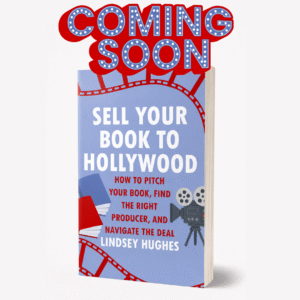
Do you think your book would make a great movie? Get on the launch day list for my new book, Sell Your Book to Hollywood: How to Pitch Your Book, Find the Right Producer, and Navigate the Deal! Coming soon!