Greetings From Testicle Tech

By John Gilstrap

I write this from Muncie, Indiana, where I’m serving on the faculty of the Midwest Writers Conference, sponsored by Ball State University (Testicle Tech–get it?). Please forgive the vulgarity. A buddy of mine who grew up in this area shared the local parlance, and I couldn’t resist.

This is my third or fourth time at MWW–twice in a row, actually, as I’m pinch-hitting for Sean Chercover, whose father died recently (God rest his soul). It’s a great conference, and a great time.

As part of the gig, I’ve been asked to critique 10 manuscripts. A couple show great prmoise, and a couple more could be great if the authors are willing to work hard. It would be inappropriate to go into detail here, but I have to say that the cardinal sin that I see being repeated over and over again is front-loading back story at the expense of action in the opening scenes. Honestly, as a writer, it’s easy to lose sight of how pernicious a tendency this is until you see it happening at the hands of other authors.

Folks, I can’t emphasize it enough: the most beautiful description in the world amounts to nothing unless it’s tied to action in the story. Remember that the first twenty pages of any book are exclusively about the reader. Once you hook them to likeable characters who face diffult time, you’ll have their hearts and minds in your grasp. If you fail to do that, then the rest of the stoyr is just that much noise.

Dare to be different. Dare to excel.

Landscapes as Characters

By Clare Langley-Hawthorne

Having just visited six national parks (Sequoia, Yosemite, Death Valley, Grand Canyon, Zion and Bryce Canyon) I have a renewed appreciation for the power of landscape (and, I might add, an intimate knowledge of all their junior ranger programs!).

Using landscape and location is critical to my own work, but I think there is a fine line between setting an evocative scene and going over the top. I have no doubt many landscapes make powerful characters in their own right, but they should never be allowed to overwhelm the story. Readers want to know about people not about rocks and trees. For new writers I think using landscape effectively can be a challenge and, for what it’s worth, I have a few tips that I’d like to share…

First, I do not subscribe to the “write what you know” philosophy. I believe you should write about any place you want to, whether or not you have been there. I would add the caveat, however, that if you do write about a place you have never been you must do your research very, very thoroughly. Readers need to be confident of the setting you have created, so misnamed places, inappropriate plants etc. will only undermine that confidence.

Secondly, use description sparingly. No one needs to read a travelogue and often I think it can be harder to write about a place you know intimately than one with which you have only a passing acquaintance. Sometimes it is, quite literally, too hard to tell the wood from the trees.

Thirdly, consider a new aspect or angle to your use of landscape. Use something about the place that is unusual or surprising, which illuminates something meaningful about the characters or plot. I try to make the landscape reflect mood, character or theme.

Finally, abandon the clichés as much as possible. Nothing is more yawn inducing than paragraphs filled with really obvious or trite descriptions. Keep it fresh.

Anyway, as I am still on the road, this post is another short one but I would like to hear your comments and thoughts on using landscape. What in your view are some of the most egregious mistakes made in terms of overdoing use of landscape?

– Posted using BlogPress from my iPad

E-Books & Kindles & Hardcovers, Oh My! by Joe Hartlaub

I find myself here through the good graces of John Miller, who has honored me by inviting me to post in his place on alternate weeks, with a wonderful introduction to boot. Thank you, John, for both. As I look at the company I am in I feel a bit like the undergraduate student who finds himself at a table with a group of learned professors and who hopes that, if he stays quiet and doesn’t embarrass himself, he will be permitted to stay. Staying quiet and not embarrassing myself are not listed among my ever-dwindling list of strengths, but we’ll see how it goes.

It has been an extremely interesting week in the publishing industry, with much talk of E-Books and Kindles and hardcovers, oh my! Despite what you may have read in self-styled newspapers of record this week, physical books are not dinosaurs and the comets aren’t coming. Not just yet. E-books (and their readers) are something more than another format, and something less than a total replacement. To put it another way: when Gutenberg rolled out his printing press, people didn’t stop telling each other stories.

Yes; in the second quarter of 2010, the good folks at Amazon sold more e-books than hardcover books. What happened in that second quarter? For one thing, a lot of fathers (including this one) received Kindles on June 20. And we felt duty bound to load them up with an e-book or twenty. What’s the point of getting a new gadget if you can’t test drive it? Amazon also instituted a price drop for their six-inch Kindle model on June 21. Similar spikes have occurred over in the music industry during holidays, when iPods, iPhones, and iPads need to be loaded up with digital tracks. Yet, CDs continue to outsell digital music tracks on an annual basis, though their share of the market continues to drop.

Do I love my Kindle? Yes. There are books I can buy for it that are not available in physical form, some of which are original works, others of which are out of print. Of course, there are other books — more than you might think — that you cannot obtain in e-book form. The issues of publishers’ and creators’ rights are not going to be easily resolved and things are probably going to get nasty (actually, they have already) before they resolve. And pricing? Let’s save that one for another discussion. If Kindle and other e-book readers are going to be serious contenders, in the long-term, there is going to have to be some sort of uniform standard put in place in terms of editing, particularly for self-published works, to match that which traditional publishers have established. I’ve read some e-books that appear to have been carefully groomed for presentation, while others seem to have been written without coming within one hundred miles of spell-check software. And how will authors get their needle to stand out in a market of thousands of haystacks without the might and majesty of a marketing department — or a helpful bookseller — to make it jump out at a potential reader? It is difficult enough to keep track of and keep up with the embarrassment of literary riches that appear every month. At the end of the day, there is still going to be a need for mainstream publishers who are willing and able to adapt their business models for this brave, and yes, scary, new world. I am impressed with what some publishers have been doing already. Baen Books, for one, has a very cool webscription e-book site. Maybe that will be a model.

Is there a trend toward e-books? Certainly. Does it mean the end of the hardcover book? Unlikely. Physical books continue to have much to recommend. There will always be companies similar to this book printing company Printivity that will continue to print hardcover books. I don’t know if I can properly explain this, but there is a comfort level with a physical book that I don’t get with plastic. There are also a host of practical issues. Physical books don’t break when you drop them, for one thing. A physical book doesn’t have a battery that will run low on you when you’re in a hotel room in Breaux Bridge, Louisiana and its cord is in Westerville, Ohio. You don’t have to worry about scratching a book cover. You can drop a book on a spider and crush it; spiders laugh at Kindles (don’t ask me how I know this). And if you throw a book across the room, it will forgive you. A Kindle will never speak to you again. We may someday see the end of the hardcover book when you can do all of those things with a Kindle (oh, yeah, don’t use one as a coaster, either), and physical books may become collectors’ items, but I’m not going to go out and buy twenty copies of THE PASSAGE on speculation just yet.

One of the most intelligent people I know is a gentleman named Tom Leavens who has been active in the music industry for decades. When the digital era began to impact the manner in which music was distributed, sold, and consumed, he compared it to the beginning of creation, stating that after the smoke, noise, and confusion had settled, things would slowly begin to sort themselves out. Just so. In this case, the world is not ending; it’s just changing. It always has.

Skin Like Leather

By John Gilstrap

We always tell up-and-comers that they’ve got to have a thick skin if they’re ever going to break into the publishing business. As the rejections pile up, it’s hard not to lose faith in your own abilities. When the news finally turns good, and an agent wants to see the manuscript, and later when an editor decides to buy it, you feel vindicated. Ha-ha and neener-neener, you think. Clearly all those rejecters were wrong.

What clearer affirmation of talent can there be than a publishing contract, right? If you’re not careful, you might start rubbing aloe on that leather-tough skin, thinking that it’s time to shed the bullet-proof coating.

Oh, that it were true.

Earlier this month, I won this year’s award at Thriller Fest for the Worst Review Ever, for an opinion of Nathan’s Run that appeared in an upstate New York newspaper: “The glue boogers in the binding were more captivating than Gilstrap’s torpid prose.” If the quote seems familiar, I’ve posted that review in this space before. That it followed dozens of major market rave reviews from around the world softened the blow quite a bit. I laughed out loud when I read it at the time, and now I treasure my award, which is a lovely wooden box that contains a fossilized dinosaur turd. All in good fun.

So, here I am again in the early stages of a new book launch (18 days straight in the Top 30 in Amazon’s Kindle store), blessed with a starred review from Publisher’s Weekly. I’m very proud of the book. Frankly, I think it’s my best work, but then I always think that when a new book comes out.

I almost took out the aloe again. Not so fast.

This is the age of the amateur Internet review, where the opinions of casual readers wield influence equal to that of professional critics. Among many very positive reviews, one fellow calls my book “surprisingly decent.” Another expresses surprise that this “second tier suspense writer” has had such a long career. I have been chastised for leading with my left-wing politics, and I’ve been chastised for leading with my right-wing politics. One reviewer chastises me for coming off as stupid because I can’t seem to keep my own politics straight.

Interestingly, several reviewers have accused me in an online forum of writing my own raves, one of them going so far as to praise my ability to change my writing style to accommodate my various fictional identities. (For the record, I’ve never done such a thing.)

God bless them all. Once the book is written and I’ve launched it out to the world, it belongs more to the reader than it does to me. It’s the nature of art that perception trumps intent. A review is a review, after all, and since the major media markets have decided that books are no longer worthy of ink and newsprint, I’m just happy that someone’s paying attention.

The need for thick skin doesn’t end at the impersonal review, however.

Nine times out of ten, people are wonderfully supportive of me and my work. It’s not about fawning. With the exception of certain engineered opportunities—book signings, etc.—I have no desire to be the star of a social setting. I’d much rather discuss current events than the mechanics of writing. Among these friends, the launch of a new book warrants a congratulations and a couple of signed books and that’s about it. Just as it should be.

Then there’s the remaining one out of ten who just sort of baffle me. Consider my relatives who ostentatiously don’t read my books (even though I think they do), yet ask me to autograph editions for their friends. A colleague of mine goes out of his way to tell me the stores he’s visited where none of my books are in stock, and another rarely misses a public opportunity to express shock that my books are currently doing as well as they are. It seems sometimes that people go out of their way to be hurtful. What am I supposed to say in response to such things?

Over the years, I’ve come to understand that none of the rudeness—whether by acts of omission or commission—are in fact intentionally hurtful. The family stuff is weirder than the collegial stuff, but I’ve decided that artistic success—even when it’s second tier—makes some people feel both empowered and uncomfortable. The public nature of book writing empowers people to criticize, while public success—and the minor celebrity that comes with it—can upset the balance of an insecure relationship.

I’m not talking jealousy here—far from it, in fact. I think it’s more akin to keeping the artist from becoming too big for his britches. I suppose that’s a noble goal, but I do wish it could be accomplished with fewer awkward moments.

Am I alone here? Do you folks encounter people who seem intent on deflating your balloon? How do you cope with it?


Want to know who done it? Check out the cast.

John Ramsey Miller

Most of us watch TV to be entertained, get inspiration, or to see what not to write. I like cop and lawyer shows. I also love Westerns and gangster-related shows. I record several and watch them at my leisure, and I suspect a lot of my fellow authors do the same thing. Cop anybody, CSI anywhere, Burn Notice, Sopranos reruns, The Closer Sedgewick, Law & Disorder, and many others. I discovered that the most famous actor on a show is the almost always the offender (usually a killer), and I’m stunned that the other cast members don’t know it until long after I do. Not much surprise in dramas due to this factor. In my experience well-known actors rarely take a part that is going to consist of being interview by the cops because their egos and agents won’t allow them to. And producers can’t resist bringing recognizable faces into their series for a juicy cameo.

I’ve been called back to work for the Census Bureau to help close the doors on the files. I’ve been riding county roads all week and will all next week, and who cares…? Anyway, I haven’t had much time to think about writing this week.

I’m not going to be doing this blog so much in the future as I have in the past. I’ve decided to take every other week off. In order to do that I started thinking about who I’d like to have share Saturdays with me. I wanted someone who would add a new dimension to the blogs we publish here. Living out here in the wilds, I run out of things to say that doesn’t involve chickens. So, I made out a list of the authors I know and respect and I gave it a lot of serious thought. (I know–John Miller and serious thought are strangers). I kept coming back to one name and last night after a scotch or two I called and asked him if he would be interested. He is, after all, one of the busiest men I know. Most authors, unless they live in a box, know Joseph Hartlaub, and Joe agreed to be here with us blogging every other week.

Joe is an entertainment attorney specializing in music and publishing, a talented author in his own right, he knows weapons and hand-to-hand combat, he’s an actor, and for years has been a critic for BookReporter.com. Joe flat knows his stuff when it comes to most aspects of our trade. Nobody reads more books than Joe, or appreciates a good book to a greater extent. I know he will add a whole new dimension to our site, and I hope you will all welcome him warmly. He has also become a very good friend of mine. It’s nice to work with friends. You readers are in for a treat.

This week they auctioned off the Roy Rogers Museum. In that spirit …Happy Trails.

On the Road

Apologies for the brevity of this post but my family and I are on the first week of a two month long holiday across the National Parks of the American West. We have done Sequoia, Kings Canyon and Yosemite so far. Off to Death Valley today…but all this roughing it (I am by no means the camping type) reminds me of the lengths to which some people will go in the name of book research. While I have been down the Orinoco most of my research involves strolling the streets of London or hanging out at the British Museum…hardly onerous! But what about you? How far have you gone in the name of research? What would you or wouldn’t you do?

– Posted using BlogPress from my iPad

First Page

When my book, UPSIDE DOWN was nominated for the first ITW Award in Phoenix, John Gilstrap was seated at my table, along with our agent, Anne Hawkins. I wish I could be seated at his table tonight. As I wrote him, I feel like Robert DeNiro in WISE GUYS when he was waiting in that diner to talk to Joe Peschi just after he became a “made” man. My fingers are crossed for Gilstrap’s NO MERCY winning an ITW award tonight.


And now to the first page, a resubmission of an earlier first page, which was critiqued a few weeks ago:

THE BULLET’S NAME

Boone, NC 1937

Jasper Green was in the middle of a sentence when, from beneath the thin plywood table, the heavy Colt in Jack Longbow’s hand responded to the positive pressure on its trigger sending a forty-five caliber hardball erupting through the surface of the table, exploding the bottle of whiskey, and entering just below Green’s lip, painting the pine-board wall behind him with his brains.

A split-second after the gun’s slide cycled another round into the chamber, Longbow spun in his chair and swept the room, ready to pull the trigger if Green had backup.

Longbow stopped the gun’s motion at the bartender and measured the threat the negress represented. Eyes wide open, her small hands flying into the air with fingers spread, she responded to the weapon’s unblinking eye by urinating on the floor.

Behind Longbow, Green’s gun, no longer being gripped by a living hand, was taken by gravity to the floor.

The corpse farted.

Longbow swung the gun and almost shot it through its still heart.

As though propelled by the issuing gas, Green toppled onto the floor, the open wounds dribbling a crimson molasses.

With his left hand Longbow lifted his Panama from the table by its crown and inspected it for blood spatter before perching it atop his head. Springing the safety up, Longbow slipped the auto into its holster under the seersucker jacket.


Thoughts?

Open Tuesdays

image It’s time for another Open Tuesday while our blogmate, Kathryn Lilley, is on medical hiatus. Bring us your questions, comments and discussions. If you have a question about writing, publishing or any other related topic, ask away in our comments section. We’ll do our best to get you an answer.

And don’t forget you can download a copy of FRESH KILLS, Tales from the Kill Zone to your Kindle or PC today.

What Do You Do When You’re Not Writing?

By James Scott Bell 

I am temporarily indisposed. Away from my computer and all my ideas for my next blog post. What I have here is a friend’s iPad and only a few moments before I move on.

So please excuse the brevity of this post, and allow me to ask a question: what do you like to do when you’re not writing? Is it something that takes you completely away from scribal concerns? Or is your writer switch always on? (I’ll return next time with more substantial thoughts from this writer’s warehouse.)

The Loss of A Perfect Setting

John Ramsey Miller

We all have our favorite locations––places in our hearts that we put to the pen. Places change. Some locations change subtly or dramatically. I wrote New Orleans, a place that changed at a snail’s pace when it did, until Katrina decimated her down to the ancient bones. The city is coming back at a snail’s pace, and it will never be the same as I remember it.

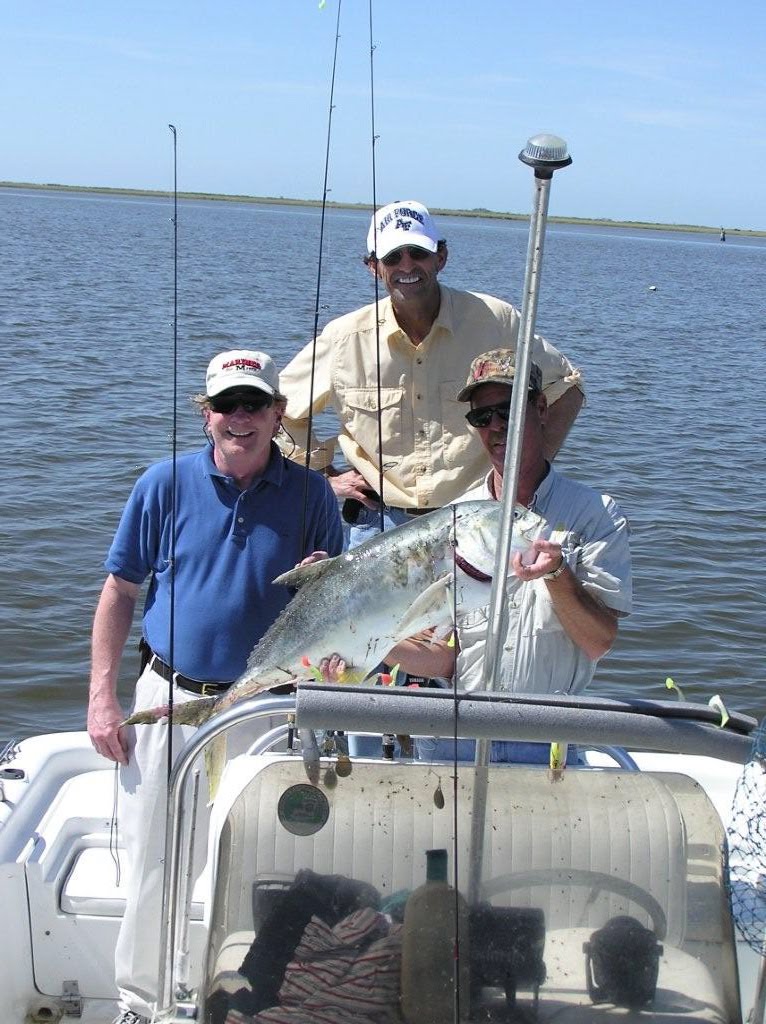
For the past many several years I have fished almost exclusively for Redfish and Speckled Trout in the brackish inlets and marshes south of Houma, Louisiana. My friends and I stay at a cabin in Falgout Marina, and we fish the lakes, marshes and often around several of the oil rigs ten miles out in the Gulf with Captain George Landry. Landry has spent his life hunting and fishing those waters and he knows the lakes and marshes better than any pelican does. What we are seeing on TV–the weeds covered with oil––are rich fishing grounds populated with marine life as well as a huge variety of wildlife. During their mating season, I have seen flocks of Pelicans–huge clouds of thousands of them sailing in loose formation, falling and dipping up shrimp, small trout and then taking to the skies again to sail like kites. Alligators, bottle-nose dolphins, hawks, egrets, gulls, deer, rabbits, crabs, shrimp …the list is endless. When I see the reeds covered in oil, I think of the times I’ve watched those reeds move as huge Redfish cut through them chasing dinner. I hate what has happened to those grounds, but the truth is we have been heading toward destruction of those wetlands for decades as salt water incursion has been killing off those wonderful natural places thanks in large part to oil exploration, conservationists being relegated to “on the corner with a bullhorn” status, and Louisiana’s unmolested political and big oil corruption, lack of funds or the politicians’ true desire to do anything to save them. It was because of the ongoing destruction of the wetlands that Hurricane Katrina and Rita did so much damage, since the shrinking wetlands act as a natural buffer against those kinds of disasters.

So, I am buying BP gasoline almost exclusively because I want them to stay solvent enough to be able to pay the billions to fix what they have helped destroy. Not to reward them for getting caught doing what most oil companies do without the same degree of unfortunate results. The truth is that none of the oil companies have cleaner hands than any of the others and neither do we. The oil companies have NEVER cared about what they destroy to get to the oil we demand to run our cars, tractors, motorcycles, lawnmowers.

I may never get to fish Sister Lake, Lake Mechant, or Lost Lake again and that saddens me immensely, but I am sadder for the generations who will never enjoy those places as I have, and never marvel at the pelicans filling the skies, the dolphins flanking our boat as we skim the flat water with the wind in our faces and the smell of salt water in our nostrils.

I am sick at heart for the thousands of people who make their livings from the renewable bounty of the marshes and lakes, all of the people who love the seafood that comes from those places, the fish and animals who will perish, and for all that is being lost and will never be the same. I have little faith that the oil will ever be completely cleaned up, because government and industry and the rest of us have such short attention spans, and words of promise do not always translate in effective action. I cannot believe that the oil can be cleaned up. Our ability to screw up beyond the bounds of science to fix those things is growing exponentially. I suspect the oil will be there poisoning everything it can get to for decades, and I predict that the next big disaster will take our eyes off the oily creatures, the dying lakes and marshes. Beaches with tar balls by the millions, lost jobs from a lack of tourists… Oysters, shrimp, crabs and the fish we harvest for our tables will likely be produced in Chinese ponds, and the drilling will go on…

History proves that we can adapt and move on, accepting loss here for gain there…

I have used this place as a setting in several of my novels because it is an enchanting, fertile, amazingly beautiful, complex, delicate and mysterious. It is now lost to the past, but burned indelibly into my imagination. I suppose I will keep using what it was to me in my novels, and I don’t want to add what it is now to that memory.