
by James Scott Bell
@jamesscottbell
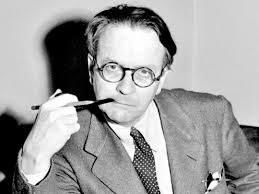
Raymond Chandler
“Trouble is my business.”—Raymond Chandler
There are three kinds of people in the world: those who can count, and those who can’t. And there are two things every novel needs if you want to please readers—Conflict and Suspense. Let us examine.
Conflict
What is the goal of your novel? Is it to entertain? Teach? Preach? Stir up anger? Change the world? Make you a lot of money?
It might be any of these things, but in the end, none of these objectives will work to their full potential unless they forge, in some way, a satisfying emotional experience for the reader.
And what gets the reader hooked emotionally? Trouble. Readers are gripped by the trials a character goes through. It’s a human response called empathy. We “see” ourselves in a character’s problems, and follow the story from there. And story has to include a problem that arises from plot.
Someday I’ll do a deep dive into when plot, once proudly championed by writers, became a “four-letter word” to many in the writing game. At some time or other it became fashionable to assert that character is primary over plot. It’s actually the exact opposite: True character is only revealed in crisis. Plunge your character into big trouble (plot) and then we’ll see what he or she is made of (character).
If you don’t believe me, imagine a 400 page novel about Scarlett O’Hara where she just sits on the porch all day, sipping mint juleps and flirting with a variety of of beaus. Gone With the Wind only takes off (on page 6) when she finds out Ashley is going to marry Melanie (trouble). And then the Civil War breaks out (big trouble!).
Another way to think about it is this: We all wear masks in our lives. A major crisis forces us to take off the mask and reveal who we really are. That’s the role of conflict in fiction, to rip the mask off the character.
Now, this conflict must be of sufficient magnitude to matter to readers. That’s why I teach that “death stakes” must be involved. Your Lead character must be facing death—which can be physical, professional or psychological.
Genre doesn’t matter. In a literary novel like The Catcher in the Rye, it’s psychological death. Holden Caulfield must find meaning in the world or he will “die inside.” Psychological death is also the key to a category romance. If the two lovers do not get together, they will lose their soul mate. They will die inside and forever have diminished lives. (That’s the feeling you need to create. Think about it. Why was Titanic such a hit with teen girls? It wasn’t because of the special effects!)
In The Silence of the Lambs, it’s professional death on the line. Clarice Starling must help bring down Buffalo Bill in part by playing mind games with Hannibal Lecter. If she doesn’t prevail, another innocent will die (physical death in the subplot) and Clarice’s career will be over.
And in most thrillers, of course, you have the threat of physical death hanging over the whole thing.
That’s why, novelist friend, trouble is indeed your business. Without sufficient conflict readers aren’t going to care enough to finish the book.
Suspense
The second element is suspense, and I don’t just mean in the suspense novel per se. Suspense means to “delay resolution so as to excite anticipation.” Another way to say this is that it’s the opposite of having a predictable story. If the reader keeps guessing what’s going to happen, and is right, there is no great pleasure in reading the novel. It will, in other words, be boring.
We’ve all had the wonderful experience of being so caught up in a story that we have to keep turning the pages. This is where writing technique can be studied and learned and applied. For example, there are various ways you can end a chapter so readers are compelled to read on. I call these “Read on Prompts,” and it was one of the first things I set out to study when I got serious about writing as a career. I went to a used bookstore and bought a bunch of King, Koontz and Grisham. When I’d get to the end of a chapter I’d write in pencil on the page what they did to prompt me to read on.
Again, genre doesn’t matter. You have to be able to excite anticipation and avoid predictability no matter what kind of book you write. Suspense technique helps you to do that. (See also Brother Gilstrap’s post about tension.) I even wrote a book for Writer’s Digest Books with the clever title Conflict & Suspense.
The prodigious pulp writer William Wallace Cook put it this way back in 1923: “Plot…is life responding to environment; and not only is this response always in terms of conflict, but the really great struggle, the epic struggle of creation, is the inner fight of the individual whereby the soul builds up character.”
Believe it.
Comments welcome.
The soul building up character. I like that.
For me it’s a continual learning process. Hitting your stride with the conflict and suspense can be challenging–either in not building sufficient conflict and suspense or in going over the top with it. Another layer of that challenge is when you’re writing books in a series and not just a stand alone. Sure, each book in a series should stand on its own, but you’re still carrying forward some thread or aspect of story for a recurring character. Easier said than done.
That is indeed a challenge for a series, but also a satisfying aspect when you can pull it off.
Jim, your three types of death stakes (physical, professional, psychological) guide me through a story. The conflicts cause micro-tension that escalates through the plot but I always have to keep the ultimate death stakes in mind.
You always do a great job of boiling these complicated concepts down to their essence! Thanks!
Thanks, Debbie. It’s easy to write about two of my favorite subjects!
Thank you! You’ve just made me realize my hero doesn’t have enough at stake. He has to prove to the town that he isn’t the loser his father was. And maybe his dad isn’t the loser everyone thinks he is.
Always good to raise them stakes (or, if you’re in Texas, steaks).
I like this: “We all wear masks in our lives. A major crisis forces us to take off the mask and reveal who we really are.”
When the mask comes off, sometimes it’s the character herself who is most surprised at what she sees.
Yes! That precisely describes what happens in what I call “the mirror moment.” The character is forced to take a long look at him/herself.
Spot on advice as always, Jim. I never understood those who say they hate suspense. Perhaps they’re only looking at suspense as full-throttle action and not the subtleties of building suspense, which fits in every genre. Some of my favorites books include rapid-fire dialogue that crackles with it.
How any writer could hate suspense is beyond me. And yes, crackling dialogue, love it.
My writing instructor/coach was just talking about not worrying about beautiful writing but to focus on character and plot. She said if you have to choose one over the other, choose plot.
I like her already!
One of the best writing tips I’ve ever read!